A staple line leak is the complication patients fear most after gastric sleeve surgery. It is rare, but it is serious. Dr. Elias Darido, a fellowship-trained bariatric surgeon, has performed more than 1,000 sleeve procedures with a 0% leak rate to date. This page explains the technique behind that record and why it also helps prevent acid reflux.
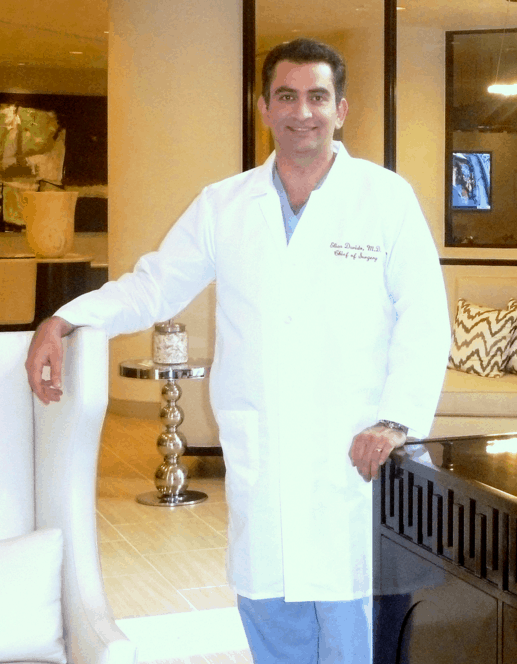
About Dr. Elias Darido
Dr. Elias Darido is board certified by the American Board of Surgery and a Fellow of the American College of Surgeons. He completed fellowship training in minimally invasive and bariatric surgery at the University of North Carolina Chapel Hill. He performs every sleeve himself. His focus is preserving the stomach’s natural function, not just removing volume.
What Is a Staple Line Leak?
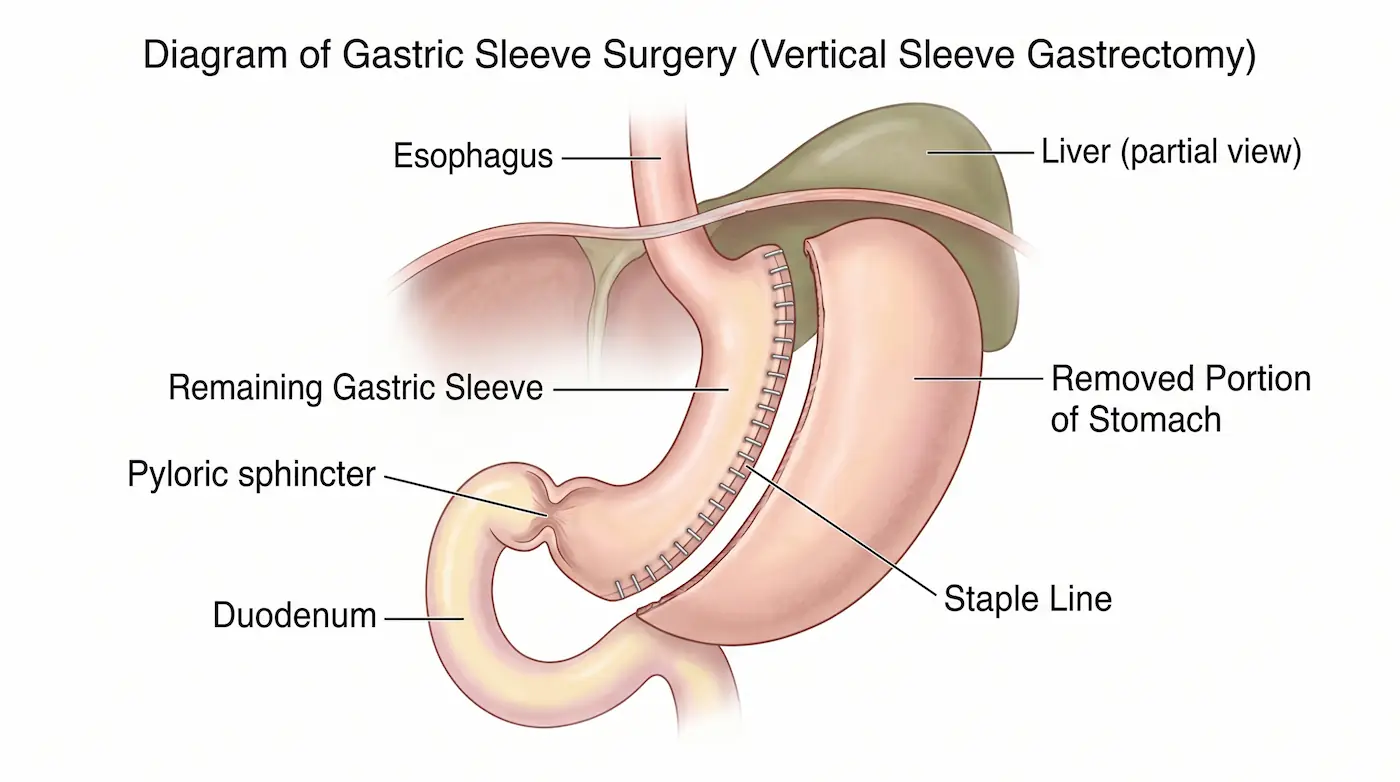
During a gastric sleeve, the surgeon removes part of the stomach and closes the remaining edge with a line of staples. A leak happens when that staple line does not fully seal. Stomach contents can then escape into the abdomen, which can cause infection and require further treatment.
Most leaks are not caused by the staples alone. They are driven by pressure inside the newly shaped stomach. When internal pressure is high, it pushes against the weakest point of the staple line. Understanding that pressure is the key to preventing leaks.
Why Pressure Inside the Stomach Matters
A gastric sleeve turns the stomach into a narrow tube. If that tube is made too tight in the wrong place, pressure builds above the narrow point. The most common place this happens is the incisura angularis, the natural bend in the middle of the stomach.
When a surgeon narrows the incisura, the sleeve behaves like a kinked hose. Pressure rises upstream. That raised pressure does two things. It strains the staple line, which raises leak risk. It also pushes stomach contents upward toward the esophagus, which causes acid reflux.
This is why Dr. Darido views leaks and reflux as two results of the same problem. Both come from a stomach shaped under too much pressure.
The Dr. Darido Technique: Preserving the Stomach’s Architecture
Dr. Darido builds his sleeve to keep internal pressure low from the start. His approach rests on a few principles.
The result is a sleeve that is narrow enough to drive weight loss but shaped to keep pressure low. Lower pressure protects the staple line and reduces the risk of reflux after surgery. A published series of 529 consecutive sleeve procedures performed with deliberate attention to avoiding strictures at the incisura angularis recorded zero leaks — consistent with the principle that technique at this specific anatomical point is a primary driver of outcomes.
How This Connects to Reflux Prevention
Many patients are told that acid reflux is a normal trade-off for a gastric sleeve. Dr. Darido does not accept that. A poorly shaped sleeve raises pressure and pushes acid upward, which causes reflux.
His pressure-sparing technique addresses one source of that problem. He also repairs any hiatal hernia he finds during the same operation, which addresses the other. Together, these two steps are designed to help patients lose weight without developing reflux.

Who Is a Candidate?
You may be a candidate for gastric sleeve surgery with Dr. Darido if your body mass index is 35 or higher. You may also qualify with a BMI of 30 or higher if you have a related condition, such as diabetes, high blood pressure, or sleep apnea. Most candidates have already tried diet and medication without lasting results. A consultation with Dr. Darido is the way to confirm whether the sleeve is right for you.
Risks and Realistic Outcomes
Every operation carries risk, and gastric sleeve surgery is no exception. Possible risks include bleeding, infection, blood clots, and, rarely, a staple line leak. Dr. Darido’s technique is built to lower the risk of leaks and reflux, but no surgeon can promise a complication-free outcome for every patient.
What Dr. Darido can offer is a track record. More than 1,000 sleeves, a 0% leak rate to date, and a complication rate under 1%. He will review your individual risks honestly during your consultation.
Frequently Asked Questions
Does a gastric sleeve always cause acid reflux?
No. Reflux after a sleeve is often the result of high pressure inside a poorly shaped stomach. Dr. Darido’s technique keeps pressure low and repairs hiatal hernias during surgery, both of which help prevent reflux.
What is the incisura angularis and why does it matter?
The incisura angularis is the natural bend in the middle of the stomach. If a surgeon narrows it during a sleeve, pressure builds above it. Dr. Darido preserves this bend to keep pressure low and protect the staple line.
How has Dr. Darido maintained a 0% leak rate?
The record reflects meticulous, pressure-sparing technique applied consistently across more than 1,000 cases. By preserving the stomach’s natural shape and avoiding aggressive resection, he keeps strain off the staple line.
Will I see Dr. Darido at every visit?
Yes. This is a one-surgeon practice. Dr. Darido personally handles your consultation, your surgery, and your follow-up care.
Is gastric sleeve surgery covered by insurance?
Many plans cover it. An insurance specialist on staff will check your benefits for free before you commit. Financing is available for patients without coverage.

Schedule a Consultation
If you are considering gastric sleeve surgery, Dr. Darido will walk you through your options in person. He serves patients across the Greater Houston area including The Woodlands, Katy, Sugar Land, and Pearland. Call Houston Weight Loss Surgery Center to schedule your consultation and ask for your free insurance check.